Today I found my own face on a GitHub repository. My photo, my name, a link to my profile, and right underneath, in plain text: “Qnetward contributor.”
Here's the problem: I have never contributed to this project. Not a single line of code, not one issue, not one pull request. Nobody asked me, either. Someone opened my profile, grabbed my photo, and put it in the shop window of their own product.
I'll be blunt: this makes me angry. It isn't a misunderstanding. It has a name: a scam. If you sell a paid product and invent a fake team out of strangers' faces and names to make it look trustworthy, that is fraud. Whoever did this is trying to buy credibility with other people's work and reputation, and didn't think anyone's consent was worth asking for.
What happened
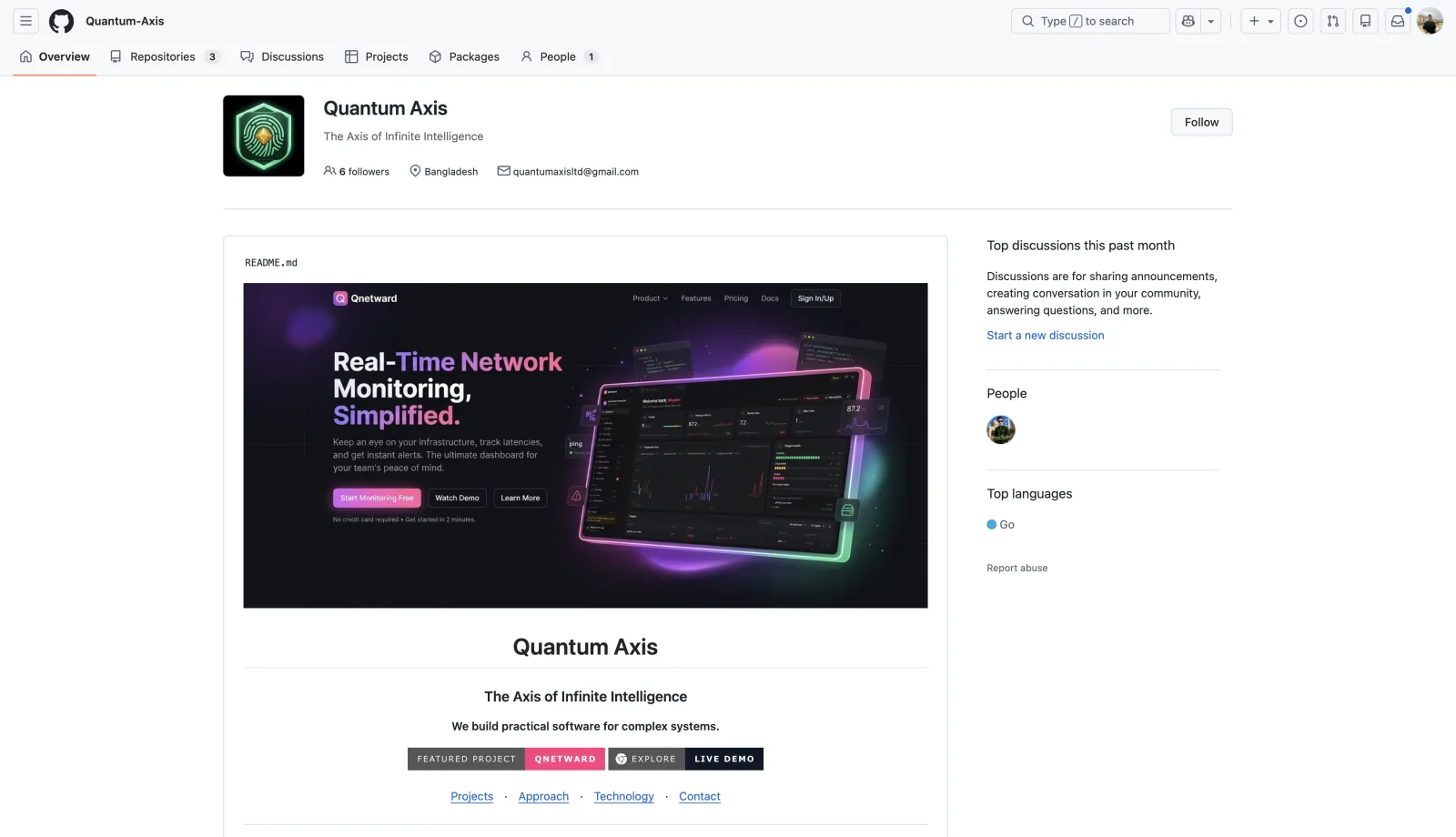
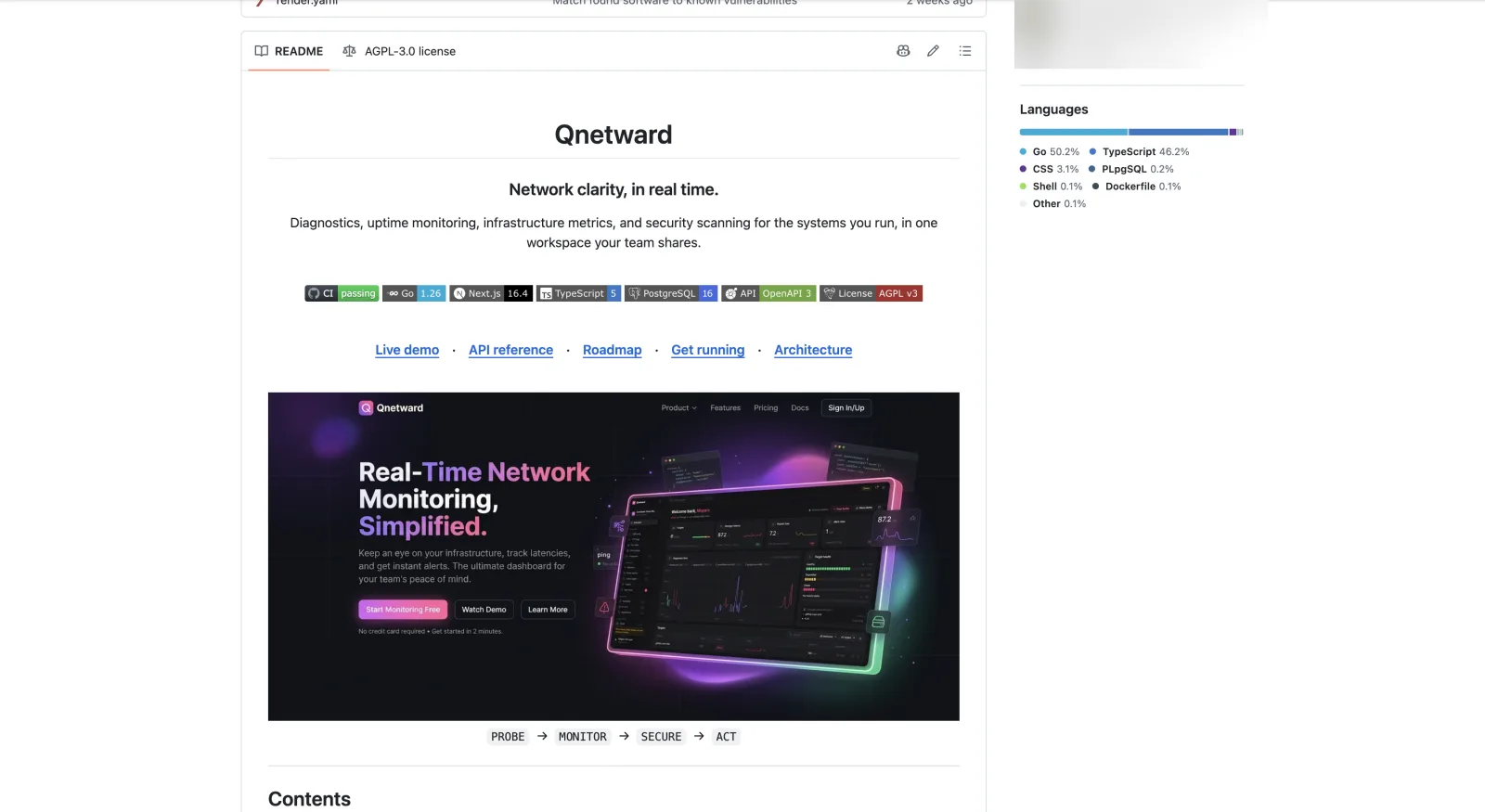
The repository is Quantum-Axis/Qnetward. It calls itself “Network diagnostics in one clean cockpit.” There's a Go backend, a Next.js dashboard and a live demo. There's also a paid Pro plan, with payments taken through local payment gateways in Bangladesh.
In the middle of the README sits a big “Our Team” section. Eleven people are listed: one as an organization member, and ten as “Qnetward contributor.” I'm one of those ten.
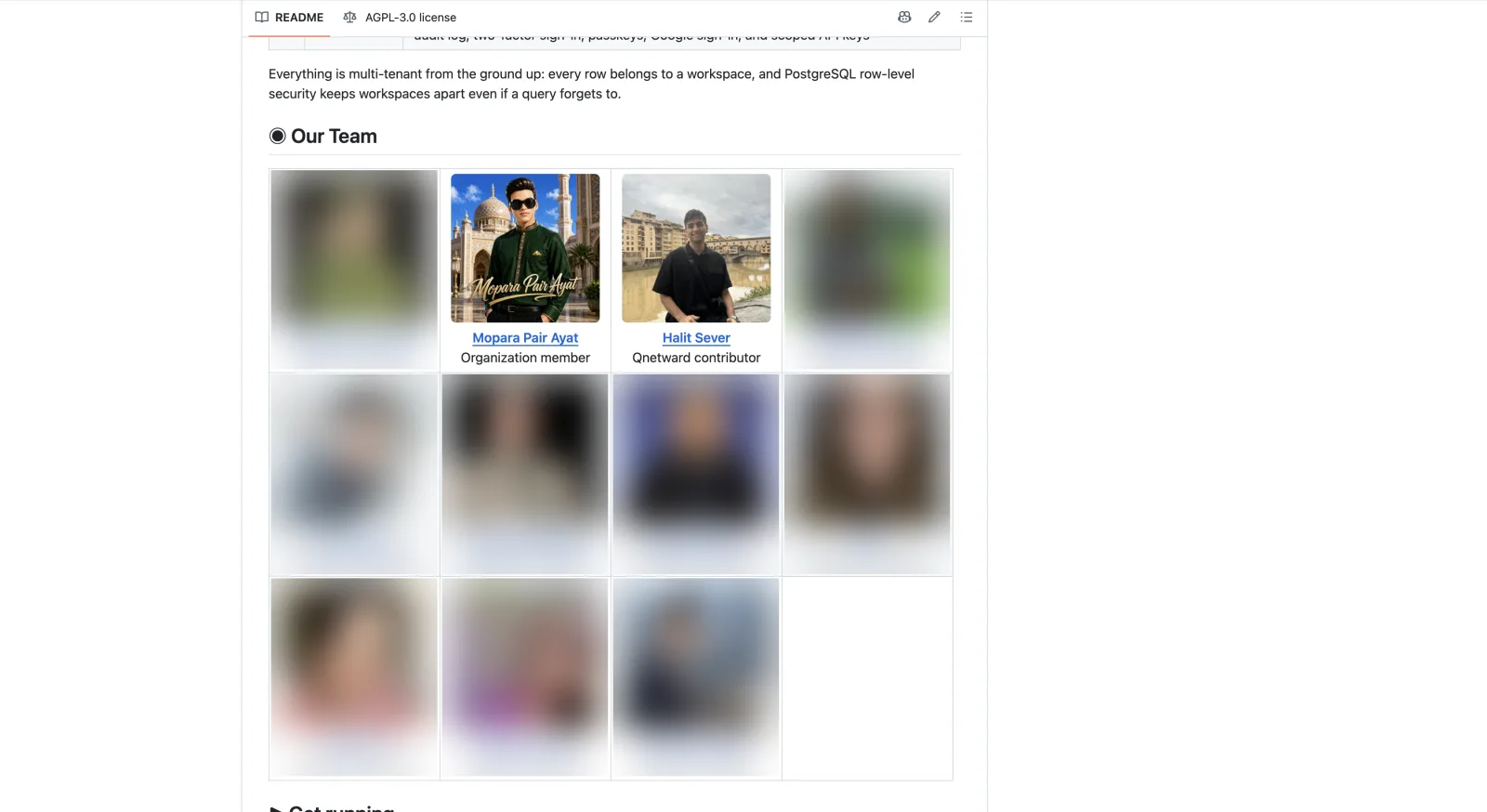
I blurred the other names and faces on purpose. They are most likely just as unaware of this as I was, and I'm not going to expose the victims a second time.
The proof: zero commits
GitHub doesn't lie about this. Filter the repository's commit history by author, and there isn't a single commit under my name:
github.com/Quantum-Axis/Qnetward/commits?author=halitsever
So this isn't a contributor list generated from the code. Someone typed the names, photos and profile links into the README by hand.
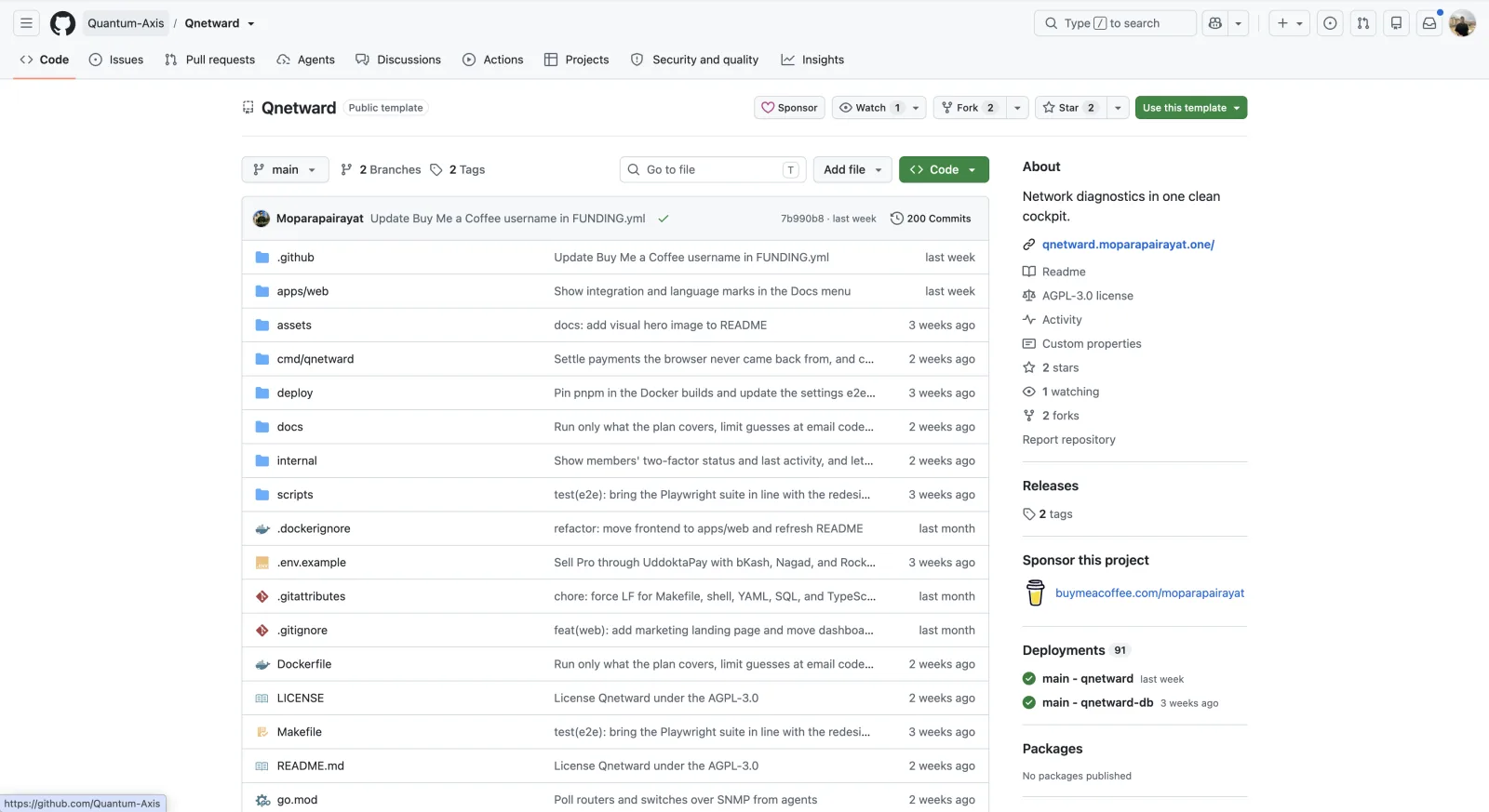
Notice the numbers, too: the project has 2 stars and 2 forks, yet the README advertises an 11-person “team.” That mismatch tells its own story.
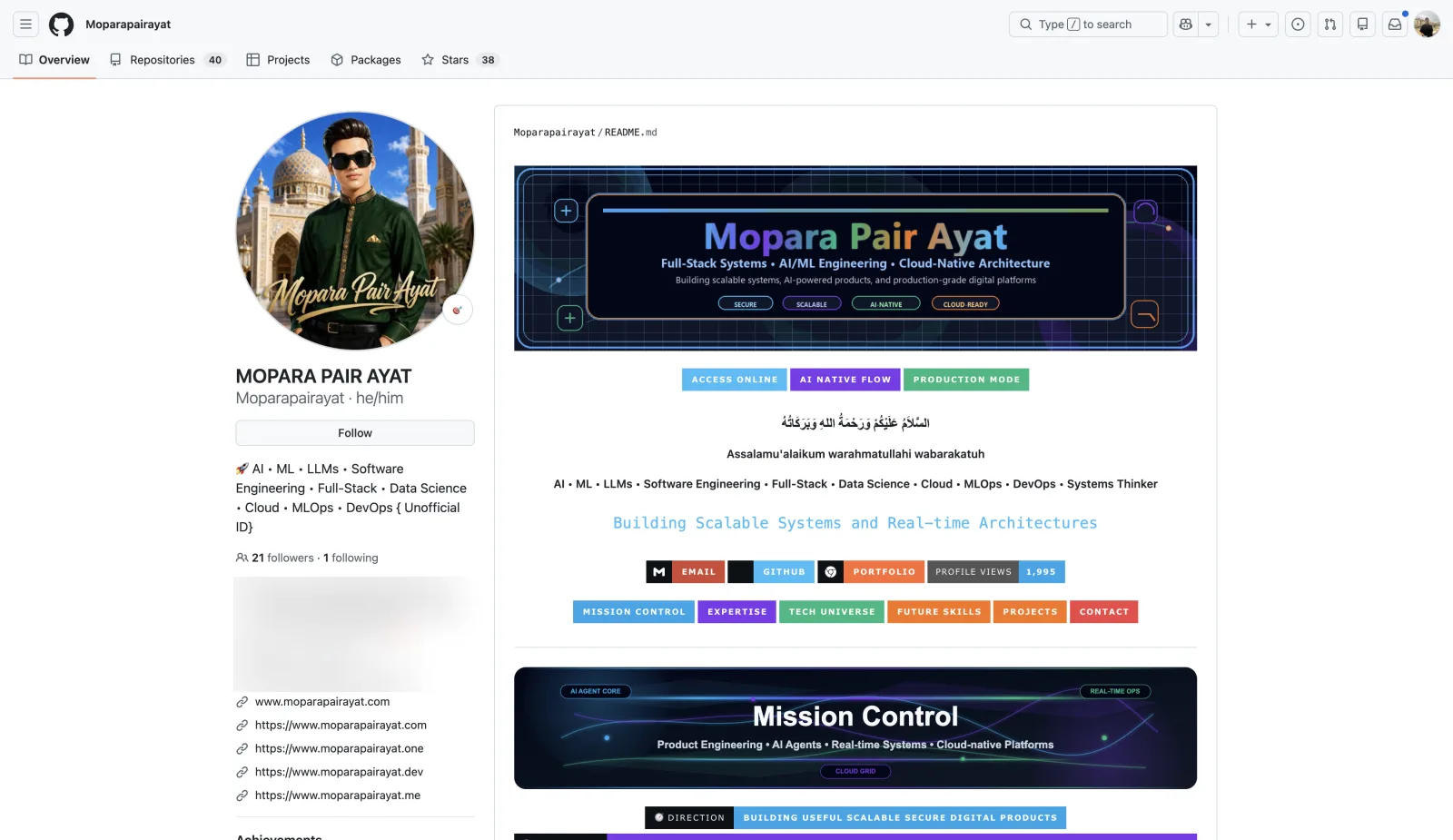
The only account on that list marked as an organization member is Moparapairayat:
Why this is so infuriating
Because what's being used here is my reputation.
A developer's GitHub profile is a summary of years of work. When you see real people's real faces in a project's README, the message is: “This is serious. There's a team behind it. These people vouch for it.”
I don't vouch for it. I don't know this project. But someone buying the Pro plan might have felt a little safer paying because they saw my face in that README. My name is being used as a trust badge for a commercial product I know nothing about.
Whether the code works is beside the point. If you collect money by telling customers “these people are behind us” when they aren't, it's a scam, however good the product is. Fake team, fake trust, real money. You didn't ask me. You didn't ask anyone else on that list either.
Why AI made this so much easier
Building a convincing fake project used to take real effort: a coherent README, a polished landing page, logos, screenshots, docs. Today all of that comes out of a few prompts in minutes. AI closed that gap. The only thing left to fake is social proof, and that gets faked by copying other people's faces and names.
This isn't an isolated case. It's part of a wider pattern:
- There's an industry for fake stars. Carnegie Mellon researchers built a tool called StarScout and scanned GitHub data. Between July 2019 and December 2024 they found roughly 6 million suspected fake stars across 18,617 repositories. According to the study, repos buy stars for growth hacking, spam, résumé fraud and even to spread malware. (arXiv, CMU)
- Lookalike developer profiles are spreading malware. The “FakeGit” campaign uncovered in summer 2026 involved about 7,600 fake GitHub repositories, more than 800 of them posing as AI skills or MCP servers. The attackers used copied projects, lookalike developer profiles and convincing READMEs. (The Hacker News, Help Net Security)
- A “flawless” repo is no longer a signal. The code compiles, the tests pass, the README is spotless, the stars are bought. Everything is designed to look convincing. (Korben)
What happened to me is the cheapest link in that scam chain: effortless credibility makeup. Buy the stars, have AI write the README, and copy the “team” from other people's profiles.
What I did
- Saved the evidence. I took screenshots (the ones in this post), so even if the README is quietly edited, the record stays.
- Reported it to GitHub under “Impersonation,” with the zero-commit link as evidence.
- Wrote this post, because ten other people are on that list and they probably have no idea.
You might be on a list like this too
I found this one by searching my own GitHub username on GitHub. That is where to start when you don't know which repo to look at: search code for github.com/<YOUR_USERNAME> and skip the repos you actually know.
Once a repo looks suspicious, checking is easy:
https://github.com/<OWNER>/<REPO>/commits?author=<YOUR_USERNAME>
If a README lists you as a contributor and that link comes back empty, your name is being used without permission. Here's what to do:
- Take a screenshot of the README.
- Go to the owner's profile, choose Block or report → Report abuse, and pick Impersonation as the category.
- Include the zero-commit link as evidence.
- Block the account.
And when you're evaluating a project, make these checks a habit:
- Do the names in the README's “team” match the names in the commit history? If not, red flag.
- Does the star and fork count match the scale the project claims?
- Is there a verifiable company behind a product that takes payments?
- Can you reach one of the “team members” and ask? If anyone had asked me today, my answer would have been very clear.
Open source runs on trust. Writing “contributor” under someone's profile takes five seconds. Winning that trust back takes far longer. To anyone collecting money by using other people's faces without permission: what you're doing is a scam. Keep my name, my face and my work out of your shop window.